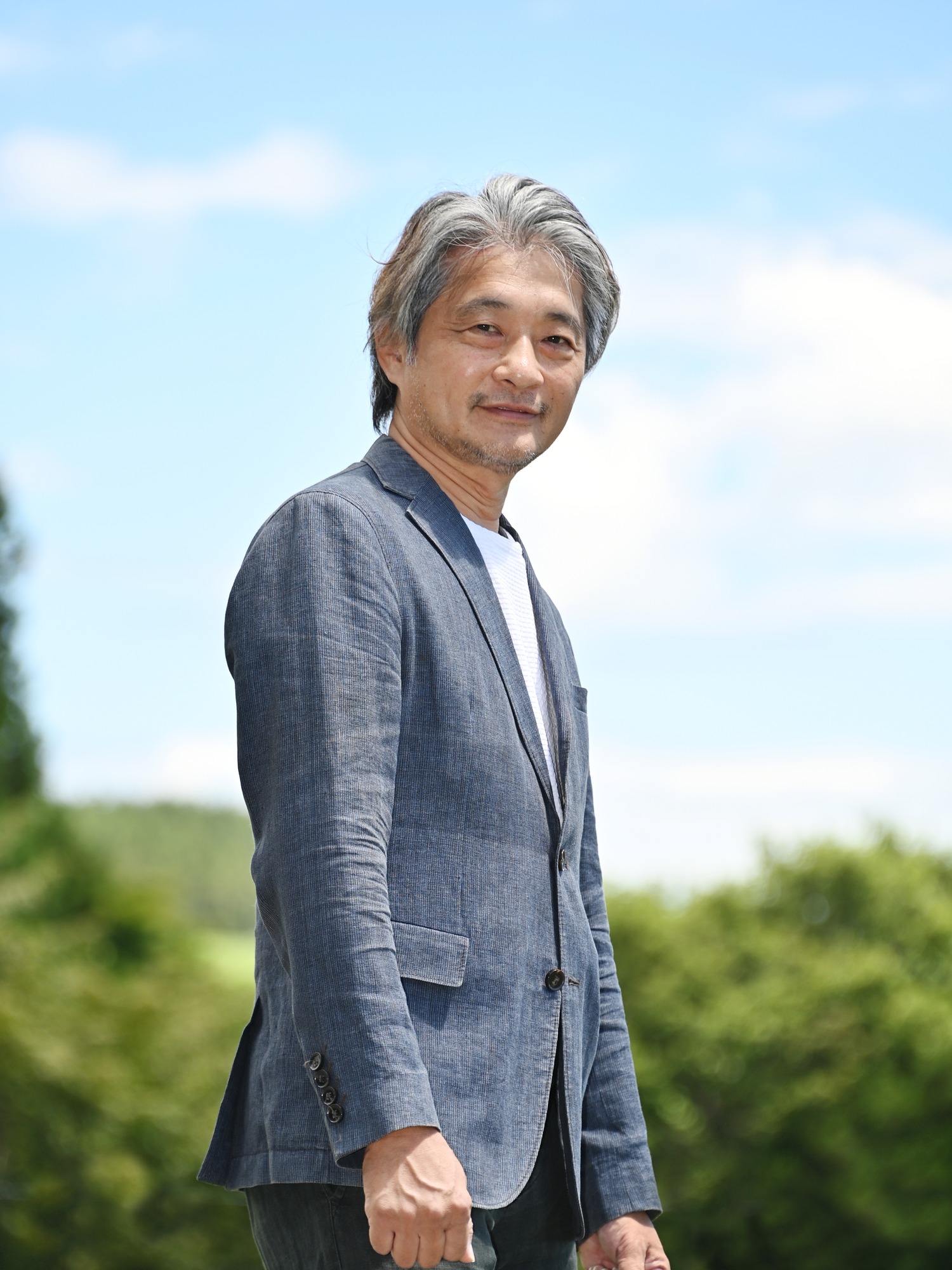
Join the Itsuo Ohashi Supporters Club on official LINE Add Friend Add friend / QR code
Independent — Itsuo Ohashi

Susono's Strength,
Toward a Richer Life.

— Susono still has untapped strength.

大橋いつお

PROFILE

Profile

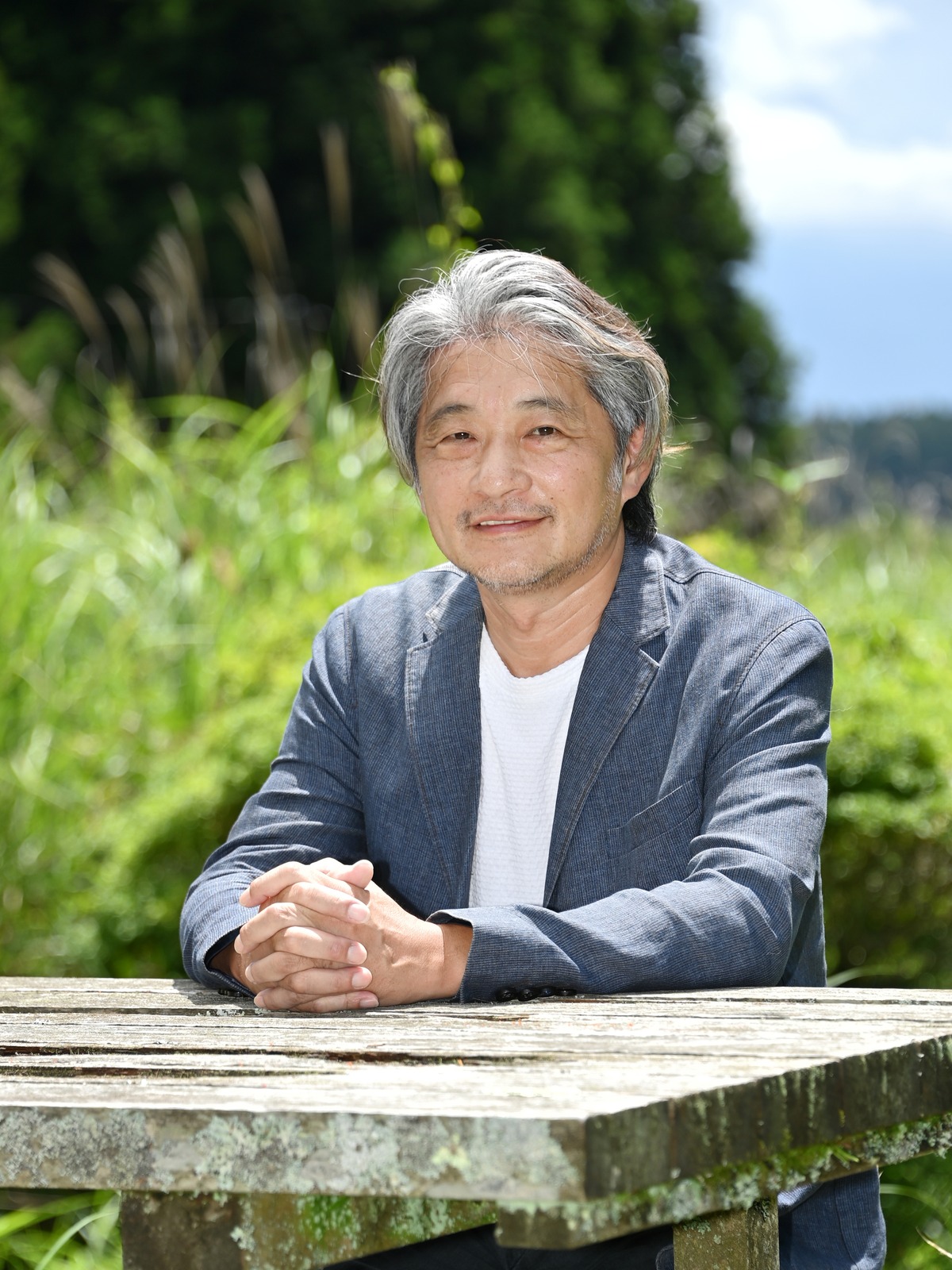
大橋いつお

Basic Information

Itsuo Ohashi

Born in 1970. From Tokyo. Currently resides in Suyama (Jurigi), Susono City.

Hobbies include camping, motorcycle touring, and walking my dog.

Current Activities

While serving as Representative Director of Syncmark Co., Ltd., I also manage Jurigi Fuji Dogg (a dog run and campsite), working to build the area's appeal. Through dialogue with city council members and public communication, I continue efforts to make city government easier for residents to understand.

Connection to Susono City

My connection to Susono City began in Jurigi. I still remember, as a child, how the deep green of the forest felt like it washed my heart clean every time I saw it.

Living here, what I felt most was how close people were to one another. Unlike city life, neighborly relationships form naturally, and when someone gets hurt, everyone looks out for them — the kind of consideration that is fading elsewhere in Japan still lives on here.

I have had ties to this area for over 40 years since childhood, acquiring my own property here 20 years ago. In 2023, I fully relocated my life and work base to Susono City.

Career

  • Graduated from Tokyo University of Science
    Worked at Lotus Corporation (later absorbed into IBM Japan) and Yayoi Co., Ltd. (formerly Intuit Corporation).
  • 2002: Founded Syncmark Co., Ltd.
    For 23 years, engaged in corporate branding, web marketing, and event promotion. My work is about asking "who, what, and how to deliver" and designing systems that produce maximum results from limited budgets.
  • Motorsports Achievements
    A client's request first drew me into motorsports. After serving as team director for a one-season SUPER GT GT300 entry in 2010, I assembled an entirely new team in 2011 — rebuilding both the organisation and the car from the ground up — and won the series championship in the team's first year. From 2012 I served as executive team director overseeing a two-car operation, and in 2014, as General Manager, I led the team to a second series championship. I also proposed a marketing programme to BMW that took me into the All Japan Rally Championship (JN5 class), where I served as project manager and driver, finishing third in the series standings in both 2016 and 2017.
    Contemporary coverage and records use my legal name, Itsuo Ohashi (大橋逸夫). Wikipedia (JP) / SUPER GT official / MINI JCW Rally Team
My strength is bringing together people with different positions and ways of thinking, and building a team united toward a single goal.

Who I Am

I served as team director in SUPER GT and won the series championship twice. I've run my own company for 23 years. Written out like that, it sounds grand, but at the core it's simple: picture the whole shape of things, then act immediately instead of putting it off. And never stop there — always move on to the next challenge. In motorsports and in business alike, that's the only thing I've really valued.

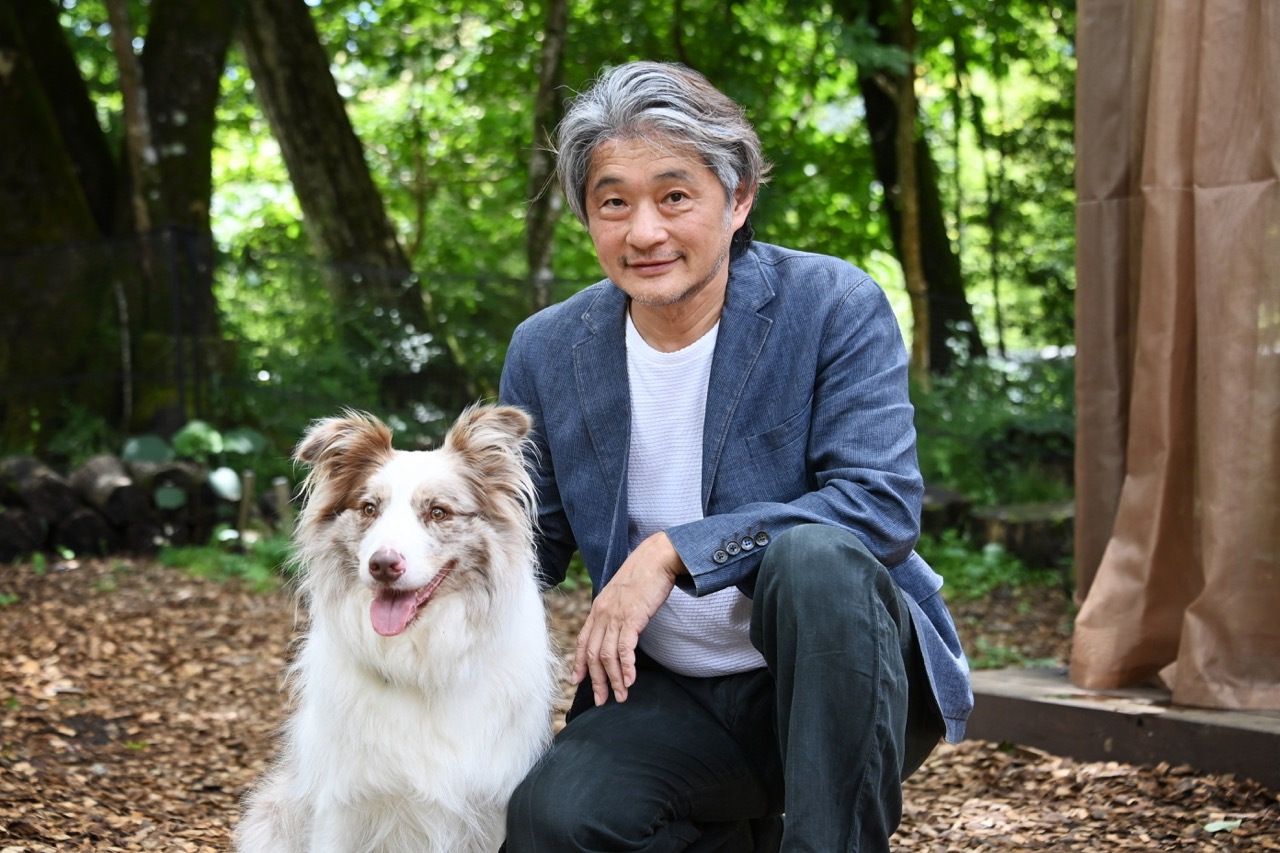
In the morning I think things over with a cup of coffee, then walk through the Jurigi forest with my dog Delta. That's my favorite part of the day. Coming to Susono, what I felt was that this city still has plenty of good things nobody has noticed yet.

More than titles or achievements, what matters to me is how to solve the problem in front of me. That's the only thing I want to keep acting on.

What kind of person is Itsuo Ohashi?

Itsuo Ohashi walking his dog Delta

With Delta, my border collie

Q. What are your hobbies?
Camping, motorcycle touring, and walking my dog. Sometimes I ride all the way to Kyushu or Hokkaido.
Q. What surprised you most since moving to Susono?
Having my water pipes freeze in winter and losing running water for an entire day.
Q. What matters most to you as a business owner?
Never stopping thinking.
Q. What have you learned from motorsports that applies to city government?
Motorsports is a world decided by hundredths of a second. I don't think that translates directly to city government, but I do think the importance of efficiency and speed carries over.
Q. What do you dislike or find difficult?
Doing the same thing over and over.
Q. What's your favorite spot in Susono (outside of Jurigi)?
Mizugatsuka Park.
Q. What's a principle you won't compromise on?
Not wasting time.
Q. Describe "Itsuo Ohashi" in one phrase.
Problem-solving ability.
Q. What's been hardest about preparing for this election?
Putting my own thoughts into words.

STATEMENT

Why I'm Running

Moving to Susono City, I came to see a certain reality.

Having been born and raised in Tokyo, I never felt — even watching Tokyo Metropolitan Assembly elections — that one person's opinion or vote was truly reflected in politics amid such a huge population. It wasn't that I had no interest in local government itself; rather, I think I felt a distance from politics simply because of Tokyo's sheer scale.

After moving to Susono, I happened to get to know several city council members. Talking with them, I learned that many were working hard, steadily and quietly. At the same time, it's also true that some members' work barely reaches residents at all. The way information is communicated hasn't kept up with the times. With this, young people have no real chance to take interest in Susono's politics, and I felt it was only natural that voter turnout keeps falling.

I began to feel that same distance not only in politics, but in daily life as well. For some households, the burden of hospital visits, shopping, and taking out the trash grows heavier with age. I even heard from someone that just taking out the trash takes 20 minutes one way. Vacant houses are increasing, and younger generations are leaving the city. For many residents, city government doesn't feel close to their lives at all.

Getting to know elderly neighbors, I came to realize just how visibly aging Susono City already is. With some municipalities managing not to lose population, is this really acceptable as is? Policies to attract newcomers and policies to prepare for an aging population aren't in conflict — they should move forward together, as two wheels of the same cart. Once people put down roots here, they don't easily leave as they age. That's precisely why I believe building a real system to support the elderly — not for votes, but as a genuine commitment — is what ultimately leads to a Susono where people can keep living.

At the scale of city government, it's close enough that I can use my own experience and perspective to change the things I think are wrong — that feeling is what made me start considering running for office.

I felt that things couldn't go on as they were.

In business management and motorsports, I have continually built systems that produce maximum results from limited resources. I believe city government is no different. What matters is thinking through where to spend a limited budget and how to actually improve residents' lives — and then following through.

I want to listen to residents and put in place policies that make the most of a limited budget. That is why I decided to run.

APPROACH

So much here is simply unknown.

When I opened a dog run and campsite in Jurigi, nothing about the location had changed. It sits at 1,000 meters at the foot of Mt. Fuji, one and half hour from central Tokyo. All I changed was how it reached people. Today, visitors come from outside the prefecture.

I don't think Jurigi is a special case. Susono already has the programs, the support systems, the shops and the events. They simply aren't reaching the people who need them, and that is a waste.

For 23 years, corporate branding has been my profession: taking something good and putting it into a form that reaches people. That is the work I know how to do.

Susono still has untapped strength.

POLICY

Policy Platform — Four Pillars

Grow

Toward a Susono where people gather and choose to stay

For those who feel Susono's vitality slipping away.

The people who grew up here are often the ones least able to see its appeal — it feels too ordinary. The city's tourism strategy sets a target of 3 million visitors a year by fiscal 2030. The figure for fiscal 2024 was roughly 1.48 million, against about 2.2 million in fiscal 2019 before the pandemic, so recovery is still under way. The city itself names the challenges: shifting from a place people pass through to a place they stay, and the low rate at which visitors move around the city. By re-editing Susono's tourism assets from an outsider's perspective — views of Mt. Fuji, a cool highland climate, and easy access from the Tokyo metropolitan area — the aim is a cycle in which tourism grows, workers are drawn here, and the resulting tax revenue goes back into improving daily life.

  • Drawing on 23 years of branding experience to deliver Susono's appealAppeal that feels too ordinary to locals becomes legible once it is re-edited from an outsider's perspective. Drawing on 23 years in the field, I will propose outreach to the city that reaches the intended audience without a large advertising budget, and press for the strength of a highland with Mt. Fuji views to feed through into tourism — restaurants and lodging included — and the jobs that come with it.
  • Reinvesting the resulting tax revenue into improving daily lifeIn budget deliberations I will keep pressing the question of how tourism revenue returns to residents, and argue for spending on everyday pleasures close to home — a day off in the cool highlands without travelling far.
  • Making use of vacant homes so long-term residents can own a home hereThe city already has a system for surveying vacant homes, checking owners' intentions, and promoting their use, plus a relocation/employment support grant (¥600,000 for singles, ¥1,000,000 for households, plus a per-child addition). I will check whether these actually reach the outlying and vacation-home areas where vacant houses are concentrated, and push for relocation and settlement support to move forward together.
  • Putting the Olympic legacy to useThe city's tourism strategy places "strengthening links between the visitor attractions around Jurigi and Mizugatsuka" first among its four area strategies. The Tokyo 2020 men's Olympic road race ran 19.2 km through Susono, and the highest point on the entire course — 1,451 m — lies within the city. Yet the heart of that route, the Minami-Fuji Evergreen Line, is designated a motor-vehicle-only road, so cyclists cannot ride it. The strategy also commits the city to petitioning the relevant authorities on tourism route development. I will press for the city to open talks with the operator, starting with something as modest as opening the road for a few event days a year. The strategy likewise calls for motorsport events, an area where my own working experience applies directly.

Rather than building something new from scratch, I will grow a system that makes use of existing resources to support residents' lives.

Support

A community where both the elderly and families raising children can live with peace of mind

For those with elderly family, and those raising children.

Outside its center, most of Susono City consists of forested, hilly terrain. Life is difficult without a car, and daily burdens grow heavier with age. The city has begun to address this: it ran a public ride-share pilot service in the Suyama district in fiscal 2025, and a further round is due to start this November.

I will press the city and the local community to develop a system in which working-age residents help elderly neighbours with shopping, hospital visits, and rubbish disposal in exchange for modest compensation.

  • Make the existing "Otagaisama Service" easy to findThe Susono Council of Social Welfare already runs the "Otagaisama Service," a ticket-based scheme through which residents can ask for help with taking out the rubbish, shopping, or picking up prescriptions. It is a well-designed programme, but almost nobody knows it exists. I only found it myself by going looking for it. The problem is not a shortage of programmes; it is that they are not reaching people. My first request will be for the city and the Council of Social Welfare to work together so that those who need this service can actually find it. Beyond that, the scheme currently excludes transport by car and operates only on weekdays during office hours. Neighbouring Gotemba runs volunteer-based transport support at ten locations across the city through its own Council of Social Welfare, and I will propose that Susono look at extending its scheme along similar lines.
  • Aligning the pilot ride-share service with hospital and shopping hoursOf the 113 trips taken during the fiscal 2025 ride-share pilot in Suyama, 102 were by high-school students and just two by elderly residents — the service was designed as a morning and evening school commute. From fiscal 2026 a daytime zone service will be added, covering trips to shops and hospitals in the city. The routes and service area have yet to be set. I will check that the hours and routes actually work for people travelling to medical appointments, and — given that Suyama has no clinic of its own — press for the design to include trips to hospitals outside the city. I will also check how the service area is drawn, so that no settlement within the district is left outside it.
  • Creating play spaces and after-school places for children, so families raising kids can keep living hereDay-to-day watching over children handled by the local community, with updates to family living elsewhere delivered through modern communication technology. By dividing roles this way, I aim for a system where both those who provide support and those who receive it can feel at ease, without strain.

I want to support not only the elderly but families raising children and younger generations, together as a community.

Prepare

Toward a disaster-resilient, secure Susono

For those who haven't seen their district's hazard map.

Susono City faces risks not only from flooding and landslides, but from earthquakes and a Mt. Fuji eruption as well. On the eruption front, the city has already made advanced preparations — designating evacuation zones and running detailed simulations with a corporate partner. But no matter how good a plan is, what actually moves it in an emergency is the human ties within a community. In my own area, the neighborhood association stopped functioning due to an aging population and a shortage of people willing to lead it. This isn't just one area's problem — it's something that could happen in any community citywide as the population ages.

  • Go into the districts to build disaster plans, rather than waiting for themSome neighborhood associations have completed their district disaster prevention plans; others have not yet begun. The city's own plan names "encouraging preparation in districts that have not yet started" as an outstanding task. I will call for hands-on support in which city staff and specialists come into each district and work through the plans together with residents.
  • Having the city actively help create "My Evacuation Plan," rather than waiting for residents to do it aloneLeaving it entirely to district initiative hasn't worked — as of fiscal 2024, zero districts had completed one. I will call for city staff and experts to go directly into districts and provide hands-on support in building these plans together.
  • Turning a strong evacuation plan into one communities can actually carry outThe city has already made advanced preparations, including designating evacuation zones and running simulations. I will push for the city to put in place a mutual-support system — drawing on other municipalities' examples of merging neighborhood associations or building watch networks — so that areas with a weakened association can still carry the plan out. Areas that are fine today may face the same challenge as they age.

Flooding, earthquakes, eruptions — no one knows when disaster will strike. I want the whole city to prepare for a reality that has become visible here a little sooner than elsewhere.

Open

Toward a city government open to its residents

For those who feel politics is distant and unclear.

Susono City stretches wide from north to south, and I often hear that city government doesn't feel close to people's lives. Many council members are active day to day, but rarely communicate through social media or other channels, leaving residents with little way to see what they actually do. When information doesn't reach people, interest doesn't grow either, and turnout keeps falling. Drawing on my marketing experience, I want to shorten the distance between residents and government and the council, and create an environment where anyone can easily take part in city affairs.

  • Hearing directly from residents through the Itsuo Ohashi Supporters Club official LINECreating an easy channel for everyday feedback and requests for what should be raised in council. Voices collected this way will feed into actual council questions, with results reported back through LINE.
  • Pushing for the city's website to become a hub for candidates and council members to share informationProposing that the city's official website include a mechanism for candidates and council members to publish their policies and activities. If every member's work becomes visible, I believe it will lead to a council that keeps being accountable to residents even after the election.
  • Improving voting access for the elderly and those with limited mobilityExtending the mobility support system from Policy ② to also serve as transportation on election day, so that everyone can cast their vote.

I want to realize a politics judged by policy and action, not connections or name recognition. I want to open up city government so that every resident can take part in shaping their city's future.

STANCE

My Stance

Spending residents' tax money where it truly matters. It sounds obvious, but I feel it's often not actually done. In business management and motorsports, I have honed, through practice, how to produce maximum results from a limited budget and limited time. City government is no different.

From politics chosen by name, connections, and name recognition, to politics judged by policy and action. That is the shape of city government I aim for.

Susono City still has untapped strength — a highland with views of Mt. Fuji, rich nature, and proximity to the Tokyo metropolitan area. If we truly put these to use, we can draw in tourism and new residents, generate tax revenue, and build a virtuous cycle that reinvests that revenue into improving daily life. Not flashy public works, but the steady accumulation of properly using what we already have.

A place where anyone can keep living with peace of mind, regardless of age or where they live. And a city that every resident can proudly introduce to others.

I myself run a business in Jurigi, but I will not take part in any city government decision that would benefit my own business.

Making Susono City more livable,
and a place to be even prouder of.

SUPPORT

Itsuo Ohashi Supporters Club

Because someone is cheering us on, we can give it our all — in racing, and in building a city, it's the same.

I've launched the "Itsuo Ohashi Supporters Club." Won't you help draw out the strength this city still has, untapped, together?

  • Joining is as simple as adding our official LINE as a friendNo paperwork — the moment you add us as a friend, your membership is complete.
  • No membership fee, no annual dues, everIt's completely free, and anyone is welcome to join.
  • An easy, two-way channel for your voiceShare your everyday thoughts and requests with us over LINE. Once you join, we'll share updates on our activities directly with you.
Become a supporter now on official LINE Just add us as a friend to join
Add as a friend
大橋いつおサポーターズクラブ公式LINE QRコード

Scan with your phone to join

Itsuo Ohashi Supporters Club — Lead Supporter: Kiyoshi Nagao / Contact: 090-3570-9841